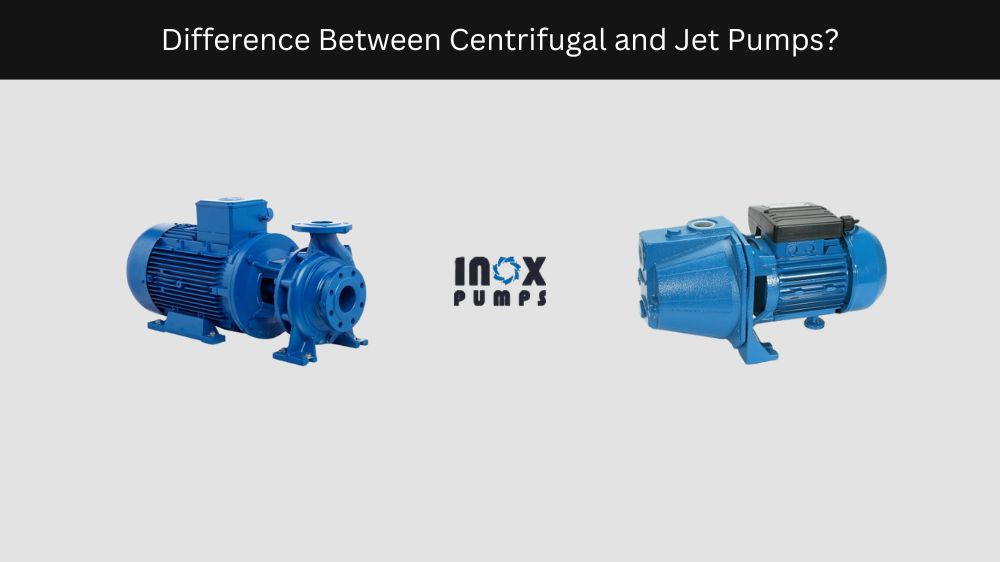
When it comes to pumping water for residential, agricultural, or industrial use, two common types of pumps dominate the market: Centrifugal Monoblock Pumps and Jet Pumps. While both serve the purpose of moving water efficiently, they operate on different principles and are suited for different applications. Understanding the differences can help you choose the right pump for your needs.
How Do Centrifugal and Jet Pumps Work?
Centrifugal Monoblock Pumps
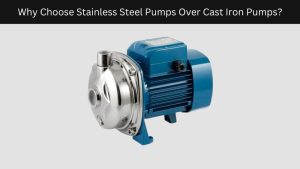
Centrifugal Monoblock Pumps operate using a rotating impeller to create centrifugal force, which moves water through the pump. These pumps are designed for high flow rates and moderate pressure applications. When the impeller spins, it pushes water outward, increasing its velocity and pressure, making it ideal for transferring large volumes of water over short distances.
Working Mechanism:
- Water enters the pump through the inlet.
- The rotating impeller imparts kinetic energy to the water.
- The velocity energy is converted into pressure energy.
- The pressurized water is discharged through the outlet.
Jet Pumps
Jet Pumps, on the other hand, use a combination of centrifugal force and suction to draw water from deep wells or underground sources. These pumps use a nozzle and venturi mechanism to create suction, pulling water from depths greater than what standard centrifugal pumps can handle.
Working Mechanism:
- A high-velocity jet of water is forced through a narrow nozzle.
- This creates a vacuum that pulls water up from a well or reservoir.
- The water mixes with the jet stream and is pushed into the pump’s impeller chamber.
- The impeller increases pressure before discharging the water.
Key Differences Between Centrifugal and Jet Pumps
| Feature | Centrifugal Monoblock Pumps | Jet Pumps |
|---|---|---|
| Working Principle | Uses centrifugal force to move water | Uses a jet mechanism to create suction |
| Depth Capability | Best for shallow water sources | Suitable for deep wells and underground water |
| Pressure Handling | Moderate pressure | High pressure |
| Efficiency | High efficiency for short-distance water transfer | Less efficient but effective for deep water lifting |
| Installation | Easier installation, requires priming | More complex installation, needs a foot valve |
| Maintenance | Low maintenance | Requires periodic maintenance for jet mechanism |
| Applications | Ideal for irrigation, cooling systems, and general water transfer | Best for deep well water supply and borewells |
Applications of Centrifugal Monoblock Pumps and Jet Pumps
Centrifugal Monoblock Pumps Are Used For:
- Irrigation in agriculture
- Water supply for residential buildings
- Industrial cooling and circulation systems
- Firefighting systems
- Water transfer in commercial establishments
Jet Pumps Are Used For:
- Deep well water extraction
- Supplying water to homes from underground sources
- Agriculture and rural water supply
- Pressurized water systems for buildings
Which Pump Should You Choose?
- If you need a high-flow, energy-efficient pump for short distances, go for a Centrifugal Monoblock Pump.
- If your water source is deep underground and you need higher suction power, a Jet Pump is the better choice.
Choosing the right pump depends on your water source depth, pressure requirements, and intended application.
Conclusion
Both Centrifugal Monoblock Pumps and Jet Pumps have their advantages and specific applications. Understanding their working principles, efficiency, and installation requirements will help you select the right pump for your needs. Whether you need a pump for irrigation, home water supply, or industrial purposes, making an informed choice will ensure optimal performance and efficiency.
If you’re unsure which pump suits your requirements, consult with a professional to make the best choice for your water pumping needs.