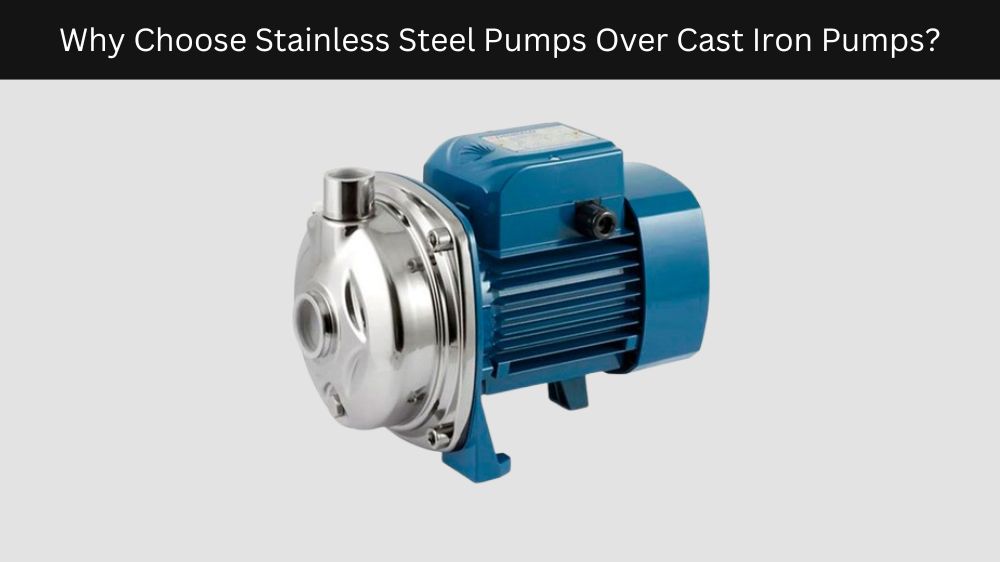
When it comes to selecting the right pump for your application, the choice of material is just as critical as the type of pump itself. Two of the most common materials in pump construction are stainless steel and cast iron. While both have their advantages, many industries are shifting towards stainless steel pumps for a range of reasons.
In this blog, we’ll explore the detailed comparison between stainless steel and cast iron pumps, covering everything from corrosion resistance and durability to cost, applications, and long-term performance. If you’re evaluating which material is better suited for your operation, read on to find out why stainless steel pump are often the superior choice.
Corrosion Resistance
Stainless Steel:
One of the biggest reasons why industries choose stainless steel over cast iron is its excellent corrosion resistance. Stainless steel contains chromium, which forms a passive oxide layer on the surface. This prevents oxidation and chemical damage in environments where the pump is exposed to moisture, chemicals, or acidic solutions.
- Ideal for aggressive media like seawater, acidic fluids, and industrial wastewater
- Does not rust or corrode easily, ensuring longer operational life
Cast Iron:
Cast iron, although strong, is highly susceptible to rust and corrosion especially when used in moist or chemical-laden environments. Without special coatings or liners, cast iron pumps degrade faster in hostile applications.
Verdict: Stainless steel wins hands down for environments involving water, chemicals, or corrosive fluids.
Durability and Longevity
Stainless Steel:
Stainless steel offers superior tensile strength and structural integrity. It retains strength even in extreme temperatures and can withstand high pressure and demanding conditions.
- Long service life
- Withstands wear, impact, and extreme temperatures
- Less prone to cracking or deformation
Cast Iron:
Cast iron is brittle compared to stainless steel. While it handles mechanical loads well, it can crack under shock loads or freezing conditions. It may also weaken over time due to corrosion.
Verdict: For longevity and resistance to mechanical and environmental stress, stainless steel is more durable.
Maintenance and Downtime
Stainless Steel:
Stainless steel pumps are low maintenance. Their corrosion resistance reduces wear and tear on internal components, leading to fewer breakdowns and minimal need for repairs.
- Lower risk of corrosion-related failures
- Fewer replacements required
- Lower lifetime cost despite higher initial investment
Cast Iron:
Maintenance costs for cast iron pumps can be higher due to frequent rust-related damage, especially in applications involving water or chemicals. Over time, corrosion can cause blockages or reduce flow efficiency.
Verdict: Stainless steel pumps save more in the long run due to reduced maintenance and downtime.
Cleanliness and Hygiene
Stainless Steel:
Stainless steel is a non-porous and easy-to-clean material. This makes it the material of choice in industries where hygiene is paramount, such as food processing, dairy, pharmaceuticals, and beverages.
- Non-reactive with most substances
- Complies with FDA and sanitary standards
- Does not leach contaminants into fluids
Cast Iron:
Cast iron is porous and can trap bacteria, making it unsuitable for hygienic environments. It can also react with certain fluids, altering their composition or quality.
Verdict: For sanitary and food-grade applications, stainless steel is the only viable option.
Weight and Design Flexibility
Stainless Steel:
Though heavier than some non-metallic options, stainless steel offers more design versatility than cast iron. It can be cast into thin-walled, precision shapes while maintaining strength, helping reduce the overall weight.
- Modern designs with improved efficiency
- Easier integration into compact systems
Cast Iron:
Cast iron pumps tend to be bulkier and heavier. This can pose installation and transport challenges in space-constrained areas.
Verdict: Stainless steel allows for sleeker, lighter, and more innovative designs.
Temperature Resistance
Stainless Steel:
Stainless steel pumps perform reliably across a wide temperature range, from cryogenic conditions to high-heat applications. The material doesn’t deform or degrade under thermal stress.
Cast Iron:
Cast iron may suffer from structural issues under extreme temperature changes. Sudden cooling or heating can cause thermal shock, leading to cracks.
Verdict: Stainless steel is the preferred material for both hot and cold fluid handling.
Initial Cost vs. Lifetime Value
Stainless Steel:
The upfront cost of a stainless steel pump may be higher, but the investment is offset by its durability, reduced maintenance, and longer service life. You save money on repairs, replacements, and downtime.
Cast Iron:
While cast iron pumps are cheaper initially, they require more frequent maintenance and may need to be replaced sooner in corrosive or demanding applications.
Verdict: Stainless steel pumps offer better return on investment (ROI) in the long term.
Environmental Impact
Stainless Steel:
Stainless steel is 100% recyclable, making it an environmentally friendly choice. Its long lifespan also means fewer resources are used for replacements and repairs.
Cast Iron:
Cast iron is also recyclable, but its higher rate of corrosion often leads to more frequent discards and energy-intensive production replacements.
Verdict: Stainless steel is more sustainable in modern industrial environments.
Industry Use Cases
| Industry | Preferred Material | Reason |
|---|---|---|
| Food & Beverage | Stainless Steel | Hygiene, corrosion resistance |
| Chemical Processing | Stainless Steel | Resistance to acids and chemicals |
| Wastewater Treatment | Stainless Steel | Longevity in corrosive environments |
| General Water Supply | Cast Iron (basic setups) | Cost-effective for clean, non-aggressive fluids |
| Agriculture | Stainless Steel | Fertilizers and chemicals in irrigation lines |
Conclusion
Whether you’re operating a water treatment plant, a food manufacturing facility, or a chemical processing unit, the benefits of stainless steel pumps far outweigh those of cast iron especially in environments that demand corrosion resistance, hygiene, and durability.
While cast iron pumps may serve well in less demanding, cost-sensitive applications, choosing a stainless steel pump ensures better reliability, lower maintenance, and longer operational life making it the smarter investment for most industries.