High-performance engineering industries work under pressure, heat, and corrosion on a regular basis. Material choice directly affects reliability, safety, and service life. Standard metals are still used, but in many cases, they fall short when conditions get demanding.
Titanium sheet metal is widely used in such situations. It provides a mix of strength, corrosion resistance and low weight that is difficult to match. Thin titanium sheet metal is also being used more often, especially where precision and weight control matter.
This blog covers what titanium sheet metal is, why it is used, and where it fits across different industries.
What is Titanium Sheet Metal?
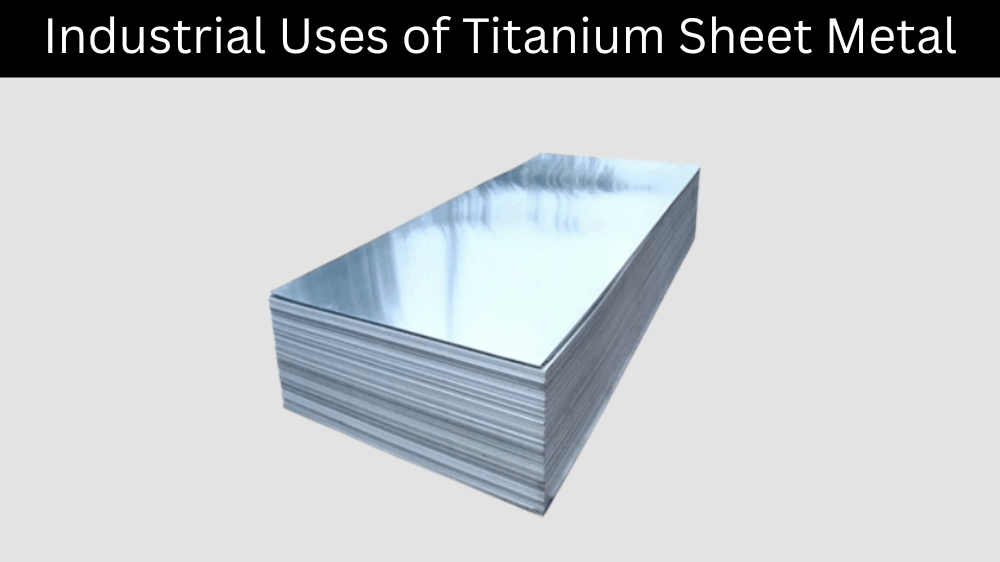
Titanium sheet metal is a flat, rolled material made from titanium or titanium alloys. Common grades are Grade 2 and Grade 5. Grade 2 is almost pure titanium and is mainly used when strong resistance to corrosion is needed. Grade 5 contains aluminium and vanadium, which makes it stronger and better for high-stress uses. Engineers choose between these grades based on how much load the part must carry, the environment it will be used in, and how it needs to be manufactured. It is available as sheets, plates, and thin titanium sheet metal. Thin sheets are used in applications where forming, shaping, or weight reduction is critical.
Key properties are straightforward. It has a high strength-to-weight ratio, so it carries a load without adding much weight. It resists corrosion in seawater, chemicals, and many industrial fluids. It performs well at elevated temperatures compared to many common metals and is also biocompatible, which allows its use in medical applications.
Why Titanium Sheet Metal is Ideal for High-Performance Engineering
Titanium sheet metal is widely chosen because it offers a better mix of strength and low weight than most materials. It weighs less than steel still provides enough strength for structural applications. In some designs, it can replace heavier components and help cut the overall load on the system. It also maintains its performance at high temperatures and does not lose strength as quickly as aluminium, which makes it especially valuable in the hotter sections of equipment.
Corrosion resistance is another major factor. It handles seawater, chlorides, and many acids without rapid degradation. This reduces replacement frequency. Maintenance is lower in most installations.
Compared to steel, titanium does not rust and is lighter. Compared to aluminium, it is stronger and handles heat better. Nickel alloys perform well in extreme conditions, but are heavier and often more expensive.
Thin titanium sheet metal is useful where tight tolerances are needed. It can be formed into complex shapes without adding unnecessary mass. This is common in aerospace and medical parts.
Industrial Uses of Titanium Sheet Metal
Titanium sheet metal is used across multiple industries where strength, corrosion resistance, and low weight are required. Its applications vary based on performance and operating conditions.
Aerospace Industry
Titanium sheet metal is widely used in aircraft structures. It is used in fuselage sections, wing components, and structural supports. The main reason is weight reduction without compromising strength.
It is also used in jet engines and exhaust systems. These areas see high temperatures and pressure. Titanium handles these conditions better than many standard metals. Lower weight also improves fuel efficiency over time.
Automotive and Motorsport Engineering
In high-performance vehicles, weight reduction is a constant focus. Titanium sheet metal is used in exhaust systems, body panels, and some suspension parts.
Thin titanium sheet metal is preferred in racing applications. It reduces weight while maintaining structural integrity. It also helps manage heat in exhaust systems, where temperatures are high and consistent.
Marine and Offshore Engineering
Seawater corrosion is a major issue in marine environments. Titanium sheet metal performs well in these conditions. It is used in ship components, offshore platforms, and desalination systems.
Applications include heat exchangers, hull sections, and piping systems. The material does not degrade easily in saltwater, which reduces long-term repair work.
Chemical Processing Industry
Chemical plants deal with aggressive fluids and high temperatures. Titanium sheet metal is used in reactors, storage tanks, and heat exchangers.
It resists acids and chemical attack better than many metals. This helps maintain equipment integrity. In some cases, it replaces lined steel systems, reducing maintenance complexity.
Medical and Biomedical Applications
Titanium is widely used in medical applications due to its biocompatibility. As a result, titanium sheet metal is used in surgical tools and devices that are meant to be implanted.
It is also used in prosthetics and support devices. Thin titanium sheet metal is useful in precision tools where exact shaping is required. It does not react with body fluids, which is important for implants.
Energy and Power Generation
In power plants, materials are exposed to heat, pressure, and fluids for long periods. Titanium sheet metal is used in condensers, turbine components, and heat exchangers.
It is used in nuclear, thermal, and renewable energy systems. The material maintains performance under continuous stress and temperature variation.
Defense and Military Applications
Titanium sheet metal is used in armoured vehicles and protective systems. It offers strength with reduced weight, which helps in mobility.
It is also used in aerospace defence components. Thin titanium sheet metal is used in lightweight armour and structural panels where weight control is necessary.
Advantages of Using Thin Titanium Sheet Metal
Thin titanium sheet metal is used where space is limited and weight needs control. It is easier to form and suit parts that require consistent dimensions.
- Enhanced flexibility and formability: Thin sections can be bent, shaped, and formed into complex geometries without cracking. This helps during fabrication, especially for custom or tight-fit components.
- Ideal for precision components: It allows accurate cutting and shaping. This is useful in parts where small dimensional variation is not acceptable, such as medical tools or aerospace fittings.
- Reduced overall system weight: Using thinner material lowers total weight without major strength loss. This is useful in applications where weight directly affects performance or energy consumption.
- Cost-efficiency in long-term applications: Initial cost is higher, but reduced maintenance and longer service life balance it out. Replacement cycles are usually longer compared to conventional materials.
- Increased demands: Used in smaller, high-accuracy parts. Demand is growing in sectors like electronics, medical devices, and precision equipment where thin, stable materials are required.
Challenges and Considerations
Titanium sheet metal has a higher initial cost compared to steel or aluminium. This affects project budgets, especially in large-scale applications.
Machining and fabrication are not simple. It requires controlled cutting speeds, proper tooling, and experienced handling. Welding also needs care to avoid contamination.
Availability can vary depending on grade and thickness. Sourcing from reliable suppliers is important, especially for critical applications.
Future Trends and Innovations
Demand for titanium sheet metal is increasing in the aerospace and energy sectors. Lightweight structures and efficiency targets are pushing its use further.
Manufacturing methods are also improving. Additive manufacturing and better forming techniques are making it easier to produce complex shapes.
There is also growing use of renewable energy systems. Applications in robotics and advanced electronics are expanding, especially where thin titanium sheet metal fits well.
Conclusion
Titanium sheet metal is used across industries where performance requirements are strict. It offers strength, corrosion resistance, and durability in one material. It is not always the cheapest option, but it reduces maintenance and improves service life. That trade-off works in many engineering setups.
Thin titanium sheet metal is becoming more common as designs move toward lighter and more precise components. Its use will likely continue to grow as engineering requirements become more demanding.